Overflowing Gutters: A Baton Rouge Diagnostic Guide
Watching the gutters pour over in every hard rain with no way to tell a clog from an undersized system - and each cause has a different fix.
Watching the gutters pour over in every hard rain with no way to tell a clog from an undersized system - and each cause has a different fix.
Diagnose by pattern: where it spills, in what rain, and whether the system is clean separates load, pitch, outlet and capacity causes from the yard.
Call when a clean system still overflows, when spill is one-sided and new, or when the ground below shows washouts - those are geometry and scope findings.
Overflow is a symptom with five usual causes, and the fix for each is different enough that guessing wastes real money: cleaning a system whose problem is capacity, sealing a system whose problem is pitch. This guide teaches the ground-level diagnosis - the patterns that separate a loaded trough from a dammed outlet from a run that was simply never big enough for its roof.
The Baton Rouge Angle
Then there are the storms with names and dates. Gustav's winds crossed Baton Rouge in 2008 and stripped trees across the capital; Isaac, Laura, Delta and Ida each delivered their own days of rain; and in August 2016 an unnamed storm stalled over the Amite and Comite basin and flooded whole communities - Denham Springs, Central, Greenwell Springs among them. Gutters are a small part of that story, but they are the part attached to your house: where they put a roof's worth of water during the worst hour of the year is a decision someone makes, on purpose or by neglect.
Cause one and two: load and outlets
Load is the most common cause and the most forgiving: troughs full of debris have no capacity left for water, so rain sheets over the face. The tells are visible - debris crowned above the line, seedlings, overflow that worsens across a season and appears in moderate rain. The fix is the full cleaning definition, and the proof is the next storm watched from the ground.
Outlet dams are load's sharper sibling: the trough may look half-passable while the exit is felted shut with needles, so the run fills like a bathtub and spills at its lowest seam. The tell is overflow concentrated toward one end, or one downspout silent while its gutter pours. The fix is at the outlet and the elbow below it, not along the run.
Cause three and four: pitch and capacity
Pitch failure ponds water in the run instead of delivering it: a hanger line bent by years of debris weight drops a span below grade, and the pond spills at the sag in any real rain. The tell is spill at the same mid-run point on a visibly clean system, and standing water in the trough a day after rain. The fix is hangers and re-pitching - geometry, not sealant.
Capacity is the honest limit: the roof's drainage area, at Baton Rouge rain rates, simply exceeds what the run and its downspouts can move. The tell is a clean, well-pitched system that overflows only in the hardest cells, along its longest runs. The fix is arithmetic - larger runs, added outlets, bigger drops - and it is the finding no cleaning can substitute for.
Cause five: the ground's revenge
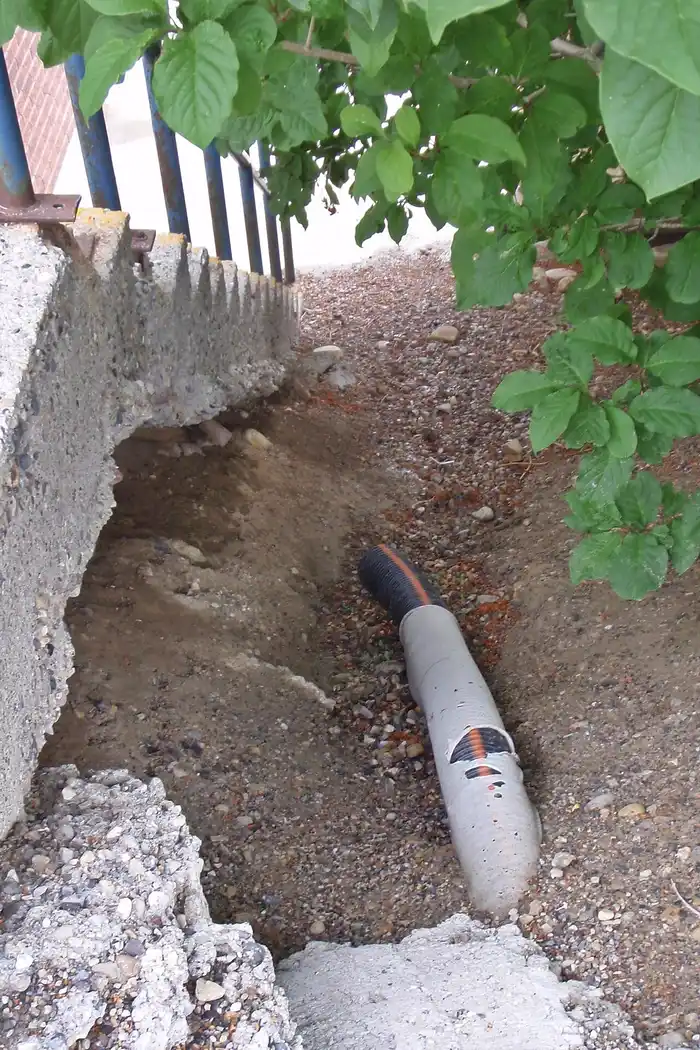
The fifth cause lives at the bottom: a downspout whose exit is blocked - shoe silted, extension crushed, buried line blind - backs its column up until the gutter above it overflows, wearing the disguise of a gutter problem while living in the yard. The tell is one drop's gutter spilling while its neighbors behave, and a base that stays marshy.
Reading overflow well means reading the whole chain before touching any link: trough, outlet, column, exit. Professionals start at the ground and work up, because the lowest failure impersonates all the higher ones. Homeowners can borrow the order: watch where it spills, check the exit first, then judge the rest.
When it is more than maintenance
Three patterns promote overflow from chore to project: a clean system that still spills (capacity or pitch - design findings), spill that appears suddenly at one point after years of quiet (a moved hanger, a parted elbow, a new dam - a repair finding), and overflow accompanied by fascia staining or washout trenches (the water has been winning long enough to write on the house - the reading should include the wood and the ground).
None of those verdicts is a catastrophe; all of them are information with a correct address. The mistake is only in answering them with the wrong trade - another cleaning for a geometry problem, another tube of sealant for a capacity problem. Diagnosis first is not a slogan in this trade; it is the entire price difference.
Step by Step
Watch it rain
The diagnosis begins during a storm, from the ground: where does it spill, along a run or at a point, in moderate rain or only in cells?
Check the exit first
Downspout base pouring or silent? Shoe clear? Extension open? The lowest link impersonates the rest.
Judge the load
Debris crowned or outlets suspect - the cleaning definition applies, in full.
Test clean
After a proven cleaning, the next storm separates load from geometry: spill that survives cleaning is pitch or capacity.
Fix the cause found
Hangers and pitch for ponds, arithmetic for capacity, the yard for exits - each cause has its own trade.
Prevention and Good Habits
Keep the cleaning calendar so load never gets to impersonate the harder causes.
Keep the cleaning calendar so load never gets to impersonate the harder causes.
Know your system's normal: which runs spill first in the worst cells is a fact worth having before it changes.
Know your system's normal: which runs spill first in the worst cells is a fact worth having before it changes.
Keep downspout exits visible and clear; half of 'gutter problems' are yard problems in costume.
Keep downspout exits visible and clear; half of 'gutter problems' are yard problems in costume.
Photograph overflow in the act - a phone video in rain is the finest diagnostic document in the trade.
Photograph overflow in the act - a phone video in rain is the finest diagnostic document in the trade.
The ten-minute rain audit
The finest diagnostic instrument in the gutter trade is a storm watched deliberately. Stand where you can see the problem elevation - from the yard, not the ladder - and note four things: where the spill starts, whether it sheets along a length or pours at a point, how hard the rain is when it begins, and which downspouts are pouring.
Point pours indict joints, outlets and elbows; sheeting along a clean run indicts pitch or capacity; spill that begins only in the hardest cells is capacity's signature; spill in a drizzle is a dam, full stop. Ten minutes of that watching outperforms a season of guessing, and a phone video of it is the best document you can hand a professional.
The bucket test on a dry day
Overflow's causes can be cross-examined in dry weather too: a hose or buckets run into the top of a downspout column tests its path - water that returns, slows or leaks at seams has found the blockage's floor. The same flow into a trough tests pitch: watch where it lingers.
Dry tests do not reproduce cloudburst rates, so they acquit blockages better than they convict capacity. Used together - rain audit for the pattern, dry test for the path - they narrow most overflow to its cause before a ladder is even placed.
Overflow's downstream diary
Where the diagnosis stalls, the downstream evidence keeps talking: washout trenches locate the spill points of past seasons; fascia stain lines record the leaks' duration; mulch and soil piled at a downspout base confess the shoe's history. The house writes it all down at ground level.
Professionals read that diary first because it integrates every storm, not just the watched one. Bring the diary into the conversation - the photographs across seasons, the trench that deepens - and the reading starts halfway done.
Myth vs Fact
The Myth
- Overflowing gutters just need a good cleaning, every time.
- Cleaning is the most common fix, promoted by repetition into the only fix.
The Fact
- Overflow has five usual causes, each with its own remedy.
- Load, outlet dams, pitch, capacity and blocked exits present alike in rain and are separated by pattern - which is why diagnosis comes before spending.
Field Checklist
Spill map
During rain, note the spill points on a sketch of the house - point or sheet, early or late in the storm.
Exit roll call
Each downspout base checked while it rains - pouring, dribbling or silent.
Trough evidence
After the storm, one look from a ladder at the worst run - crowned, ponded or clean.
Ground diary
Photograph the washout lines and trenches; they integrate every storm you did not watch.
Change log
When did it start, and what changed - a tree, a roof, a season of skipped cleaning?
What Good Paperwork Looks Like
An overflow diagnosis scope should name the cause it found and the evidence for it - load measured, outlet tested, pitch read, capacity calculated or exit traced - before it names the remedy's price.
Remedies quoted without a named cause are guesses with invoices. The cause, in writing, is what makes the fix checkable after the next storm.
The Professional Standard
A professional overflow call is a diagnosis engagement: the pattern is taken first - from your rain account or video, the spill's location and weather - then the chain is tested in order, exit to trough, with flows and levels rather than impressions. The finding is delivered as a named cause with its evidence, and only then as a remedy with a scope. Crews who arrive selling the remedy before the pattern is heard are telling you which half of the trade they practice.
Mistakes That Cost Homeowners
Cleaning as reflex
Selling the fourth cleaning to a system whose capacity failed three cleanings ago.
Sealing the pond
Resealing a sagging run's joints while the pond that submerges them stays - the leak returns wearing new sealant.
Upsizing blind
Selling bigger metal for a blocked exit in the yard, and grading the new gutter by the same old puddle.
Ignoring the diary
Quoting from the ladder while the washout trenches at the base hold two seasons of unconsulted evidence.
Overflow is the gutter system's plainest sentence, and it always has a subject: the load, the outlet, the pitch, the arithmetic or the yard. Read in that order - ground first, ladder last - most homeowners can name the subject themselves, and every professional conversation afterward starts from evidence instead of from the top of a sales script.
Questions This Guide Answers
Why do my gutters overflow even right after cleaning?
Because load was not the cause. A clean system that still spills is reporting pitch - a sag ponding and spilling at its low point - or capacity, a roof whose drainage area exceeds the system's size at local rain rates. Both are geometry findings with design fixes, and the cleaning visit is what proves them honestly.
Why does only one section of my gutters overflow?
One-section spill points at a local cause: a dammed outlet serving that run, a parted elbow or blocked drop beneath it, or a sag in that span. Local symptoms are good news - they mean the reading can be local too, and the fix is usually a defined repair rather than a system question.
Is overflowing always an emergency?
Rarely an emergency, never a decoration. Occasional spill in the season's worst cell on an older system is a watch item; spill in ordinary rain, spill writing washouts at the foundation, or spill staining fascia is a scheduled finding. The water's destination decides the urgency, not the water's volume alone.
Can bigger gutters fix overflow?
When capacity is the cause, yes - six-inch runs and three-by-four drops move roughly the volume the arithmetic asks for. When the cause is load, pitch or a blocked exit, bigger metal changes nothing but the bill. That is why the diagnosis comes first: bigger is a fix with an address, not a general tonic.


Gutters Overflowing, Sagging or Pulling Away From the Roofline?
One call connects you with a gutter professional serving Baton Rouge and the surrounding capital-region communities - installation, repair, cleaning, guards and drainage.
📞 Call Now